


Why Modern PHP Outperforms Its Older Versions in Today’s Development Landscape
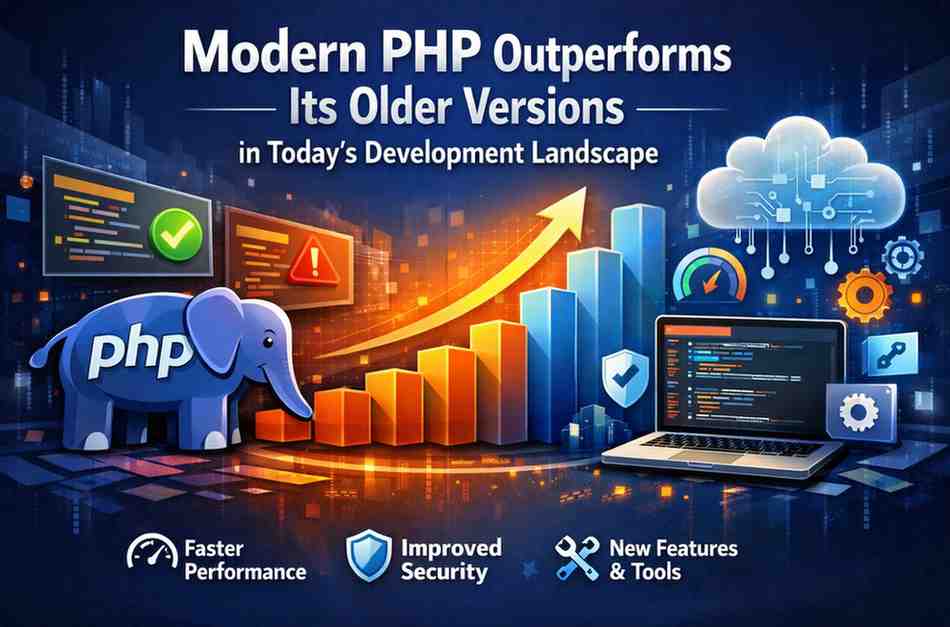
PHP has been a cornerstone of web development for decades. From powering early dynamic websites to supporting large scale platforms today, it has evolved significantly. Many businesses still associate PHP with its older versions, often assuming it is outdated or limited. This perception no longer holds true. Modern PHP has addressed past limitations and now stands as a robust, secure, and high performance technology for building scalable digital solutions. Understanding how current PHP versions outperform older releases helps decision makers choose the right foundation for long term growth in PHP Web Development.
Performance Improvements That Matter to Businesses
Older PHP versions, especially before PHP 7, struggled with execution speed and memory efficiency. Applications often required more server resources to handle growing traffic, leading to higher infrastructure costs. Modern PHP versions introduced a completely redesigned engine that significantly boosts performance. Execution time has been reduced, memory usage is lower, and response times are faster.
For businesses, this means websites and applications load quicker, handle more concurrent users, and scale without frequent hardware upgrades. Faster applications also improve user experience, which directly impacts customer retention and conversion rates. These performance gains alone make modern PHP a smart investment for companies focused on efficiency and growth.
Stronger Security Compared to Legacy PHP
Security was one of the most common concerns with older PHP versions. Many legacy applications relied on outdated practices that left them vulnerable to attacks. Modern PHP addresses this with built in security enhancements, better encryption support, and improved error handling.
Newer versions encourage secure coding standards by default, reducing the risk of common threats such as SQL injection and cross site scripting. Regular updates and active community support ensure vulnerabilities are identified and patched quickly. For organizations handling sensitive customer data, modern PHP Web Development provides a much stronger security foundation than earlier versions ever could.
Cleaner Syntax and Better Developer Productivity
Older PHP codebases were often criticized for inconsistent syntax and lack of structure. This made long term maintenance difficult and increased development time. Modern PHP introduces cleaner syntax, strict typing options, and advanced language features that improve code readability and reliability.
These improvements allow development teams to write cleaner code, reduce bugs, and collaborate more effectively. For clients, this translates into faster development cycles, easier updates, and lower maintenance costs over time. A well structured PHP application is easier to scale and adapt as business needs evolve.
Enhanced Framework and Tool Ecosystem
The rise of modern PHP frameworks has transformed how applications are built. Older PHP versions lacked standardized tools, leading to fragmented development practices. Today’s PHP ecosystem includes mature frameworks that follow industry best practices and design patterns.
These frameworks streamline development, improve security, and ensure consistency across projects. They also integrate seamlessly with modern tools for testing, deployment, and performance monitoring. Businesses benefit from faster time to market and more reliable applications built on proven foundations.
Compatibility with Modern Technologies
Legacy PHP often struggled to integrate with newer technologies and architectures. Modern PHP is designed to work smoothly with APIs, cloud platforms, microservices, and modern databases. This flexibility allows businesses to build future ready systems without being locked into outdated architectures.
Whether integrating with third party services, building mobile friendly backends, or deploying applications in cloud environments, PHP has adapted to modern requirements. This makes it a practical choice for organizations planning long term digital transformation using PHP Web Development.
Long Term Support and Community Backing
One major drawback of older PHP versions is the lack of ongoing support. Unsupported versions expose businesses to security risks and compatibility issues. Modern PHP versions come with clear support timelines, ensuring regular updates and stability.
The global PHP community remains active, continuously improving documentation, tools, and best practices. This strong ecosystem reduces dependency on individual developers and ensures long term viability for business applications.
Cost Effectiveness Without Compromising Quality
Compared to many newer technologies, PHP remains cost effective while delivering enterprise level performance. Modern PHP reduces development time, lowers infrastructure costs through better performance, and minimizes security risks. This balance makes it particularly attractive for startups, small businesses, and large enterprises alike.
By upgrading from older versions, businesses protect existing investments while gaining modern capabilities without rebuilding applications from scratch.
Conclusion
Modern PHP is no longer the language many remember from its early days. It is faster, more secure, easier to maintain, and fully aligned with today’s digital demands. Choosing updated PHP over legacy versions allows businesses to build scalable, reliable, and future ready solutions. For organizations seeking a proven yet modern approach, PHP Web Development remains a powerful and dependable choice in the evolving web ecosystem.