


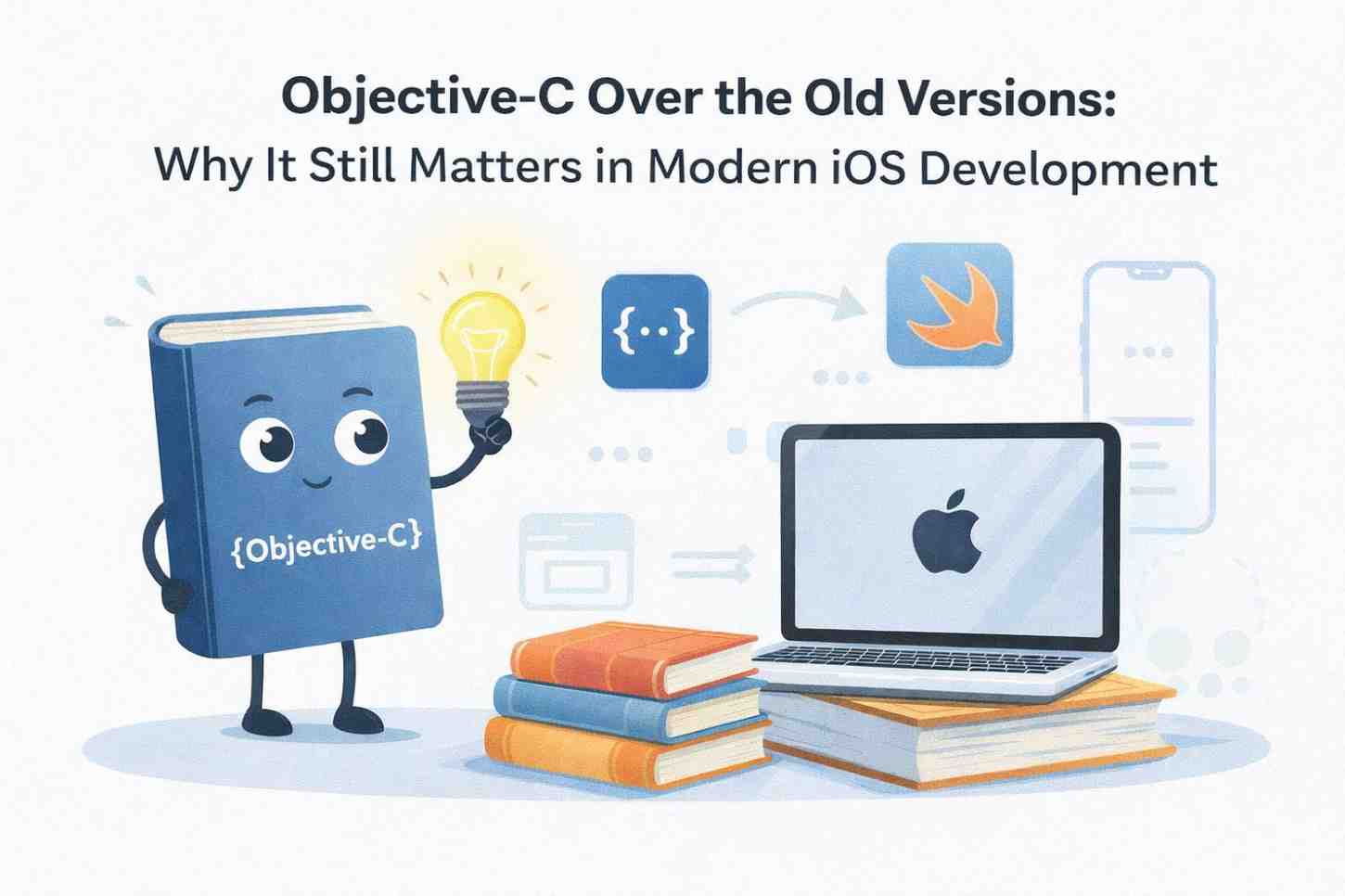
Objective-C Over the Old Versions: Why It Still Matters in Modern iOS Development
In the fast-moving world of mobile technology, programming languages often rise, evolve, and sometimes fade away. Yet some languages continue to hold strong because of their stability, ecosystem support, and real-world performance. Objective-C is one such example. While many discussions focus on newer languages, understanding Objective-C over the old versions reveals why it remains a practical choice for many businesses and developers today.
This article explores how Objective-C evolved, what improvements it introduced over its earlier forms, and why Objective-C App Development still delivers value in modern application ecosystems.
The Evolution of Objective-C
Objective-C was originally developed as an extension of the C programming language, combining C’s performance with Smalltalk style messaging. Early versions were powerful but rigid. Developers had to manage memory manually, deal with verbose syntax, and rely heavily on runtime behaviour that was not always predictable.
Over time, Apple refined Objective-C to address these challenges. The introduction of Automatic Reference Counting, improved runtime features, and better tooling in Xcode significantly enhanced the developer experience. Compared to older versions, modern Objective-C is safer, more efficient, and far easier to maintain.
These changes were not cosmetic. They directly impacted application stability, development speed, and long-term scalability.
Key Improvements Over Older Objective-C Versions
Memory Management and ARC
One of the biggest pain points in older Objective-C versions was manual memory management. Developers had to carefully track retain and release calls, which often led to memory leaks or crashes.
With Automatic Reference Counting, the compiler now handles memory management automatically. This single improvement reduced bugs dramatically and made Objective-C App Development more reliable for production grade applications.
Cleaner Syntax and Readability
Earlier Objective-C code was often criticized for being verbose and hard to read. Newer versions introduced literals, modern property syntax, and improved type inference. These enhancements reduced boilerplate code and made applications easier to understand and maintain.
For businesses, this means faster onboarding of developers and lower long term maintenance costs.
Stronger Runtime and Dynamic Features
Objective-C has always been known for its dynamic runtime. However, modern implementations refined these capabilities with better performance and safer method resolution. Compared to older versions, developers can now build flexible architectures without compromising app speed or stability.
This makes Objective-C particularly useful in complex enterprise applications that require dynamic behaviour and modular design.
Performance and Stability Advantages
Performance remains one of Objective-C’s strongest advantages over its older versions. Improvements in compiler optimization, runtime efficiency, and memory handling allow modern Objective-C applications to run faster and crash less often.
For customers, this translates into smoother user experiences and fewer app updates caused by stability issues. Businesses benefit from reduced support costs and better app store ratings.
In industries like finance, healthcare, and logistics, where stability is critical, Objective-C App Development continues to be a dependable option.
Ecosystem and Legacy Support
One major reason Objective-C remains relevant is its deep integration with Apple’s ecosystem. Large portions of iOS, macOS, and core Apple frameworks are still written in Objective-C. Older Objective-C codebases can be upgraded incrementally, without the need for a full rewrite.
For organizations with existing applications, this is a huge advantage. Instead of rebuilding everything from scratch, teams can modernize their apps gradually while preserving proven logic and business rules.
Compared to older versions, modern Objective-C offers backward compatibility with improved safety, making it ideal for long term digital products.
Business Value for Customers
From a customer perspective, the language behind an app matter less than the results it delivers. Objective-C’s evolution ensures that applications built today are secure, stable, and scalable.
Businesses choosing Objective-C over its older versions gain:
- Reduced technical debt
- Faster bug resolution
- Long term platform support
- Lower redevelopment costs
These benefits directly impact time to market and return on investment. For companies with mission critical iOS apps, upgrading to modern Objective-C is often a smarter decision than adopting an entirely new language.
When Objective-C Makes Sense Today
Objective-C is especially suitable when:
- Maintaining or upgrading legacy iOS applications
- Building performance sensitive apps
- Working with low level system frameworks
- Ensuring compatibility with older iOS versions
While newer languages exist, Objective-C’s maturity and reliability continue to serve real business needs.
Conclusion
Objective-C has come a long way from its earlier versions, evolving into a safer, more efficient, and developer friendly language. Its improvements in memory management, syntax, performance, and ecosystem integration make it a strong contender even today. For businesses seeking stability, scalability, and long-term value, Objective-C App Development remains a practical and proven choice in the Apple development landscape.