


Why Groovy Stands Strong Over Older Language Versions in Modern Development
In the fast-moving world of software engineering, languages that adapt survive. Those that do not slowly fade into maintenance mode. Groovy is one such language that has consistently evolved while many older versions of traditional languages have struggled to keep pace. Built on the Java Virtual Machine, Groovy combines the reliability of Java with the flexibility modern development demands. For businesses and developers alike, Groovy in Web Development offers a practical upgrade path rather than a risky rewrite.
This article explores why Groovy has outperformed older language versions and why it continues to be a smart choice for web and enterprise applications.
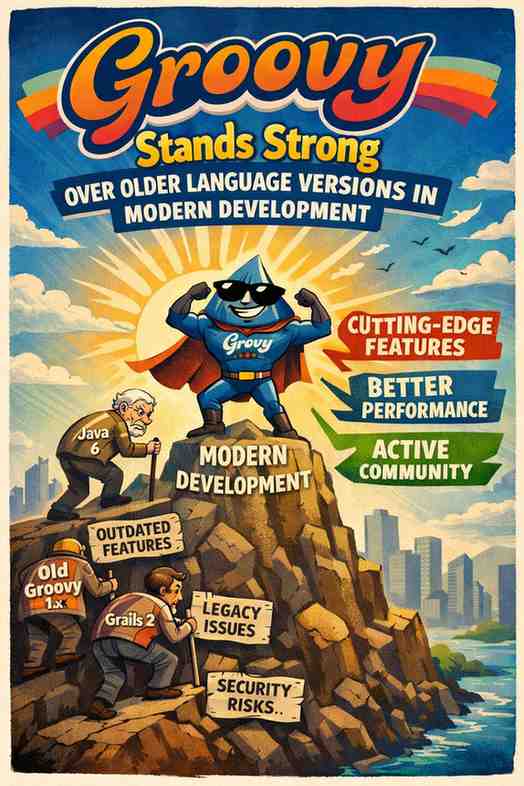
The Limitations of Older Language Versions
Older versions of popular programming languages were designed for a different era. They assumed long release cycles, monolithic architectures, and limited integration needs. As web applications grew more dynamic, these assumptions began to break.
Some common challenges include verbose syntax, slower development cycles, limited support for modern frameworks, and rigid type systems. These issues increase development costs and slow down time to market. For customers, this often translates into delayed features, higher maintenance expenses, and reduced scalability.
Groovy directly addresses these pain points without forcing teams to abandon existing Java investments.
Groovy’s Modern Syntax Advantage
One of Groovy’s most immediate benefits is its clean and expressive syntax. Compared to older versions of Java or similar languages, Groovy removes unnecessary boilerplate code. Tasks that once required dozens of lines can now be done in a few readable statements.
This simplicity reduces development time and minimizes bugs caused by repetitive code. Teams adopting Groovy in Web Development often report faster onboarding for new developers and improved collaboration between backend and frontend teams.
From a customer perspective, faster development means quicker feature releases and better responsiveness to changing requirements.
Seamless Java Compatibility
Unlike many modern languages that require full migration, Groovy works seamlessly with existing Java codebases. This backward compatibility is a major reason it outperforms older language versions that lack flexibility.
Developers can gradually introduce Groovy into legacy systems without disrupting operations. Existing Java libraries, frameworks, and tools continue to work as expected. This lowers risk and protects previous investments.
For businesses maintaining large applications, Groovy in Web Development provides modernization without the cost and uncertainty of a full rewrite.
Strong Support for Modern Frameworks
Older language versions often struggle to integrate with modern frameworks. Groovy, on the other hand, thrives in contemporary ecosystems. It powers frameworks like Grails, integrates smoothly with Spring Boot, and plays a key role in build tools such as Gradle.
This ecosystem enables rapid prototyping, RESTful API development, microservices architecture, and cloud native deployments. Features like closures, dynamic typing, and DSL support make Groovy ideal for configuration heavy and automation driven environments.
By choosing Groovy in Web Development, customers gain access to tools that accelerate delivery while maintaining enterprise grade reliability.
Productivity and Cost Efficiency
Groovy’s flexibility leads directly to higher developer productivity. Dynamic typing and scripting capabilities allow teams to test ideas quickly and iterate faster than with older, rigid languages.
This productivity advantage translates into lower development costs. Fewer lines of code mean fewer bugs, easier testing, and simpler maintenance. Over the lifetime of an application, these savings become significant.
For startups and enterprises alike, Groovy offers a balance between speed and stability that older language versions fail to deliver.
Better Testing and Automation
Testing frameworks written in Groovy, such as Spock, have transformed how teams approach quality assurance. Compared to older testing tools, Groovy based testing is more readable, expressive, and maintainable.
Automation scripts written in Groovy are easier to modify and extend, making continuous integration and delivery pipelines more efficient. This results in more reliable releases and reduced downtime for end users.
Customers benefit from more stable applications and faster resolution of issues.
Future Proofing Your Applications
Technology decisions should not only solve today’s problems but also prepare for tomorrow. Groovy continues to evolve alongside the JVM, incorporating modern language features while maintaining compatibility.
Unlike older language versions that are nearing end of life or receiving minimal updates, Groovy remains actively maintained and widely adopted. Its adaptability ensures that applications built today will remain relevant and scalable in the future.
Conclusion
Groovy succeeds where older language versions fall short by combining modern syntax, enterprise compatibility, and rapid development capabilities. It reduces risk, lowers costs, and accelerates innovation without sacrificing reliability. For organizations looking to modernize without disruption, Groovy in Web Development offers a proven, customer focused solution that aligns technology with real business outcomes.