
Objective-C Over the Old Versions: Why It Still Matters in Modern iOS Development In the fast-moving world of mobile technology, programming languages often rise, evolve, and sometimes fade away. Yet some languages continue to hold strong because of their stability, ecosystem support, and real-world performance. Objective-C is one such example. While many discussions focus on newer languages, understanding Objective-C over the old versions reveals why it remains a practical choice for many businesses and developers today. This article explores how Objective-C evolved, what improvements it introduced over its earlier forms, and why Objective-C App Development still delivers value in modern application ecosystems. The Evolution of Objective-C Objective-C was originally developed as an extension of the C programming language, combining C’s performance with Smalltalk style messaging. Early versions were powerful but rigid. Developers had to manage memory manually, deal with verbose syntax, and rely heavily on runtime behaviour that was not always predictable. Over time, Apple refined Objective-C to address these challenges. The introduction of Automatic Reference Counting, improved runtime features, and better tooling in Xcode significantly enhanced the developer experience. Compared to older versions, modern Objective-C is safer, more efficient, and far easier to maintain. These changes were not cosmetic. They directly impacted application stability, development speed, and long-term scalability. Key Improvements Over Older Objective-C Versions Memory Management and ARC One of the biggest pain points in older Objective-C versions was manual memory management. Developers had to carefully track retain and release calls, which often led to memory leaks or crashes. With Automatic Reference Counting, the compiler now handles memory management automatically. This single improvement reduced bugs dramatically and made Objective-C App Development more reliable for production grade applications. Cleaner Syntax and Readability Earlier Objective-C code was often criticized for being verbose and hard to read. Newer versions introduced literals, modern property syntax, and improved type inference. These enhancements reduced boilerplate code and made applications easier to understand and maintain. For businesses, this means faster onboarding of developers and lower long term maintenance costs. Stronger Runtime and Dynamic Features Objective-C has always been known for its dynamic runtime. However, modern implementations refined these capabilities with better performance and safer method resolution. Compared to older versions, developers can now build flexible architectures without compromising app speed or stability. This makes Objective-C particularly useful in complex enterprise applications that require dynamic behaviour and modular design. Performance and Stability Advantages Performance remains one of Objective-C’s strongest advantages over its older versions. Improvements in compiler optimization, runtime efficiency, and memory handling allow modern Objective-C applications to run faster and crash less often. For customers, this translates into smoother user experiences and fewer app updates caused by stability issues. Businesses benefit from reduced support costs and better app store ratings. In industries like finance, healthcare, and logistics, where stability is critical, Objective-C App Development continues to be a dependable option. Ecosystem and Legacy Support One major reason Objective-C remains relevant is its deep integration with Apple’s ecosystem. Large portions of iOS, macOS, and core Apple frameworks are still written in Objective-C. Older Objective-C codebases can be upgraded incrementally, without the need for a full rewrite. For organizations with existing applications, this is a huge advantage. Instead of rebuilding everything from scratch, teams can modernize their apps gradually while preserving proven logic and business rules. Compared to older versions, modern Objective-C offers backward compatibility with improved safety, making it ideal for long term digital products. Business Value for Customers From a customer perspective, the language behind an app matter less than the results it delivers. Objective-C’s evolution ensures that applications built today are secure, stable, and scalable. Businesses choosing Objective-C over its older versions gain: Reduced technical debt Faster bug resolution Long term platform support Lower redevelopment costs These benefits directly impact time to market and return on investment. For companies with mission critical iOS apps, upgrading to modern Objective-C is often a smarter decision than adopting an entirely new language. When Objective-C Makes Sense Today Objective-C is especially suitable when: Maintaining or upgrading legacy iOS applications Building performance sensitive apps Working with low level system frameworks Ensuring compatibility with older iOS versions While newer languages exist, Objective-C’s maturity and reliability continue to serve real business needs. Conclusion Objective-C has come a long way from its earlier versions, evolving into a safer, more efficient, and developer friendly language. Its improvements in memory management, syntax, performance, and ecosystem integration make it a strong contender even today. For businesses seeking stability, scalability, and long-term value, Objective-C App Development remains a practical and proven choice in the Apple development landscape.

Category: Blog
Blog
Why Flutter Is Replacing Older App Development Frameworks

Why Flutter Is Replacing Older App Development Frameworks The mobile app ecosystem has evolved rapidly over the last decade. Businesses that once relied on older native and hybrid frameworks are now facing rising development costs, slower release cycles, and inconsistent user experiences across platforms. This shift has pushed decision makers to look for a modern, stable, and scalable alternative. Flutter has emerged as that alternative, redefining how applications are built and maintained. At the centre of this shift is Flutter App Development, a framework designed to solve long standing challenges that older technologies struggled to address. Limitations of Older App Development Frameworks Traditional native development using Java for Android and Objective-C or Swift for iOS required maintaining two separate codebases. While this approach offered strong performance, it significantly increased development time, testing effort, and long term maintenance costs. Hybrid frameworks like Cordova, PhoneGap, and early versions of Ionic attempted to solve this problem using web technologies. However, these solutions often suffered from performance bottlenecks, limited access to native APIs, and inconsistent UI behaviour across devices. Even popular JavaScript based frameworks faced challenges when scaling applications or handling complex animations and high performance requirements. For businesses, these limitations translated into slower time to market, higher technical debt, and difficulty adapting to evolving user expectations. Flutter’s Architectural Advantage Flutter introduced a fundamentally different approach. Instead of relying on platform specific UI components or web views, Flutter uses its own rendering engine. This allows it to draw UI elements directly onto the screen, ensuring consistent design and behaviour across platforms. This architectural choice eliminates many of the compatibility issues seen in older frameworks. Developers no longer have to worry about subtle UI differences between Android and iOS. For customers, this means a uniform and polished user experience regardless of device. From a business standpoint, Flutter App Development reduces risk by providing predictable results across platforms without sacrificing performance. Single Codebase, Faster Delivery One of Flutter’s strongest advantages over older solutions is its single codebase model. With Flutter, developers write one codebase that runs on Android, iOS, web, and desktop platforms. Older frameworks promised similar benefits but often required extensive platform specific customization. Flutter delivers on this promise more effectively by offering rich native integrations and a robust plugin ecosystem. This directly impacts project timelines. Faster development cycles mean quicker product launches and more frequent updates. For customers, this translates into faster access to new features, improved app stability, and quicker responses to market changes. Performance That Matches Native Apps Performance has always been a concern with cross platform frameworks. Many older solutions struggled with lag, slow animations, and delayed user interactions. Flutter addresses this issue by compiling directly to native ARM code and using a high performance rendering engine. As a result, Flutter apps feel smooth and responsive, even for complex interfaces. This makes Flutter App Development suitable for applications that demand high performance, such as fintech platforms, e-commerce apps, and real time dashboards. For end users, better performance improves engagement and retention. For businesses, it enhances brand credibility and customer satisfaction. Developer Productivity and Long Term Maintenance Flutter significantly improves developer productivity through features like hot reload, which allows developers to see changes instantly without restarting the app. Older frameworks often required full rebuilds, slowing down iteration and debugging. In addition, Flutter’s structured widget system promotes cleaner code and better separation of concerns. This leads to more maintainable applications over time. When compared to legacy systems that accumulate technical debt quickly, Flutter offers a more sustainable development path. Lower maintenance costs and easier onboarding of new developers make Flutter an attractive long term investment for growing organizations. Strong Ecosystem and Community Support Another factor where Flutter surpasses older frameworks is ecosystem maturity. Backed by Google and supported by a rapidly growing global community, Flutter benefits from continuous improvements, frequent updates, and extensive documentation. Older frameworks often suffer from inconsistent support, deprecated plugins, or shrinking communities. Flutter’s active ecosystem reduces dependency risks and ensures access to modern tools and integrations. This stability gives businesses confidence that their technology choice will remain viable for years to come. Customer Centric Business Impact From a customer perspective, Flutter enables faster innovation, consistent design, and reliable performance. From a business perspective, it reduces development costs, shortens delivery timelines, and simplifies maintenance. Companies adopting Flutter can focus more on product strategy and user experience rather than technical limitations. This alignment between technology and business goals is what makes Flutter a strategic choice rather than just a technical upgrade. Conclusion As mobile applications continue to play a critical role in digital strategy, choosing the right development framework is essential. Flutter has clearly addressed the performance, scalability, and maintenance challenges that older frameworks could not fully resolve. By enabling faster delivery, consistent user experiences, and long term sustainability, Flutter App Development stands out as a future ready solution for businesses looking to build reliable and high quality digital products.
Why React Native Is a Smarter Choice Over Older Framework Versions
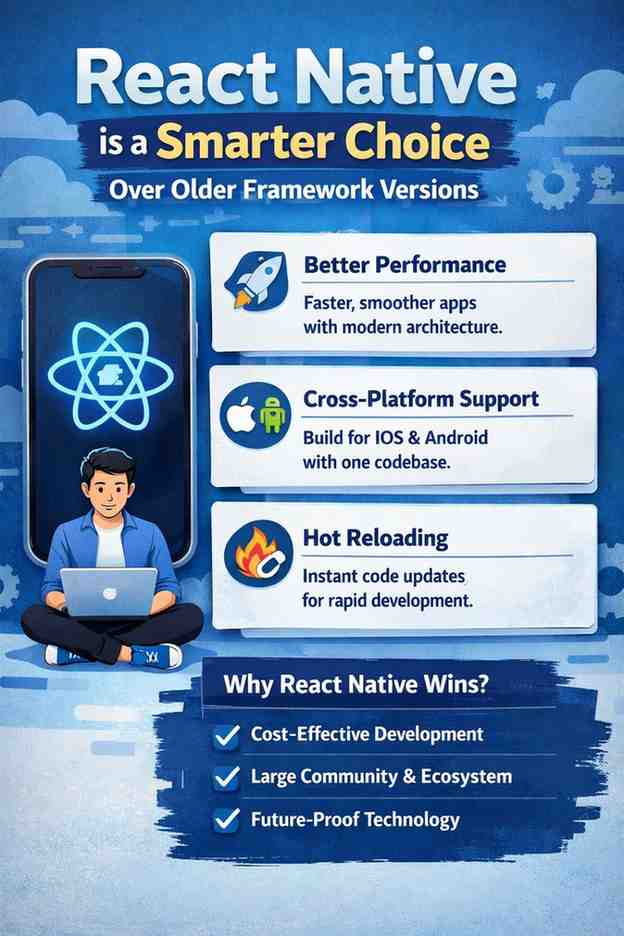
Why React Native Is a Smarter Choice Over Older Framework Versions Technology evolves fast, and web and app development is no exception. Businesses that still rely on older development frameworks often face rising maintenance costs, slower performance, and limited scalability. This is where React Native stands out. Built and maintained by Meta, React Native has matured into a reliable, future ready framework that solves many of the challenges associated with older versions of web and mobile development technologies. This article explores why React Native is a better choice compared to older frameworks, with a clear focus on performance, cost efficiency, developer productivity, and long term business value, especially in the context of React Native Web Development. Limitations of Older Development Frameworks Older frameworks such as legacy JavaScript libraries, early hybrid platforms, or outdated native stacks were built for a different era of devices and user expectations. While they served their purpose, they now struggle to meet modern demands. Common issues include slower rendering, higher memory usage, limited component reusability, and inconsistent user experience across platforms. From a business perspective, this often results in higher development costs, longer release cycles, and difficulty integrating with modern APIs and tools. Customers today expect fast loading, smooth interfaces, and consistent behavior whether they are using web, Android, or iOS. Older frameworks simply were not designed with this level of cross platform consistency in mind. React Native’s Modern Architecture Advantage React Native introduces a component based architecture that significantly improves how applications are built and maintained. Unlike older frameworks that rely heavily on web views or duplicated codebases, React Native allows developers to write a single codebase that runs across multiple platforms. This modern approach makes React Native Web Development especially appealing for businesses looking to unify their web and mobile strategy. The framework bridges native components directly, resulting in better performance and smoother animations compared to older hybrid solutions. For customers, this translates into apps that feel fast, responsive, and intuitive, without the lag often associated with legacy technologies. Faster Development and Lower Costs One of the biggest business advantages of React Native over older versions is development speed. Features like hot reloading allow developers to see changes instantly, reducing development and testing time. Older frameworks often require separate teams for web and mobile development. React Native eliminates this duplication by allowing shared logic and components. This directly reduces development costs, simplifies maintenance, and shortens time to market. For customers, faster development means quicker access to new features, regular updates, and better overall product stability. Businesses can respond faster to customer feedback without rebuilding entire systems. Consistent User Experience Across Platforms Consistency is critical for customer trust. Older frameworks often produce different UI behaviors on different platforms, which leads to confusion and frustration. React Native uses native UI components, ensuring the application looks and behaves like a true native app on each platform. This consistency is a major reason why React Native Web Development is increasingly adopted by companies aiming to deliver seamless digital experiences. From login flows to navigation and performance, users experience the same quality regardless of device, which strengthens brand perception and customer satisfaction. Strong Ecosystem and Long Term Support Many older frameworks suffer from limited community support or are no longer actively maintained. This creates risks related to security updates, compatibility, and future scalability. React Native benefits from a massive global community, frequent updates, and backing from Meta. Thousands of open source libraries, tools, and integrations are readily available, making it easier to extend functionality without reinventing the wheel. For customers, this means more stable applications, better security, and confidence that the platform will continue to evolve with industry standards. Easier Maintenance and Scalability Maintenance is where older frameworks often become costly. Codebases grow complex, documentation becomes outdated, and scaling the application requires major rewrites. React Native’s modular structure simplifies maintenance and allows teams to scale features incrementally. New functionalities can be added without disrupting existing workflows. This scalability ensures that businesses can grow their digital products alongside customer demand, without facing the technical debt common in older systems. Conclusion React Native is not just a replacement for older frameworks, it is a strategic upgrade. It addresses the performance, scalability, and cost challenges that legacy technologies struggle with today. By adopting React Native, businesses gain faster development cycles, consistent user experiences, and long term reliability. For organizations focused on delivering modern, high quality digital solutions, React Native Web Development offers a future proof path that aligns technology with customer expectations and business growth.
Why Modern WordPress Is a Smart Upgrade Over Older Versions

Why Modern WordPress Is a Smart Upgrade Over Older Versions WordPress has come a long way from being a simple blogging platform. Over the years, it has evolved into a powerful content management system that supports complex business websites, eCommerce platforms, and scalable web applications. For businesses still relying on older versions, upgrading is no longer optional. It is a strategic move that directly impacts performance, security, and growth. This article explains why modern WordPress clearly outperforms older versions and how WordPress Web Development has become a preferred choice for forward thinking businesses. Improved Performance and Speed Optimization One of the biggest limitations of older WordPress versions was slow loading speed. Earlier architectures relied heavily on basic PHP execution and limited caching support. Modern WordPress versions are built with performance in mind. Core updates now include better database queries, optimized scripts, and compatibility with advanced caching mechanisms. With support for lazy loading, optimized image handling, and modern hosting environments, websites built using the latest WordPress Web Development standards load faster and deliver smoother user experiences. This directly improves engagement, reduces bounce rates, and supports better search engine rankings. Stronger Security and Regular Updates Security vulnerabilities were a major concern in older WordPress versions. Many outdated installations lack protection against modern threats such as malware injections, brute force attacks, and data breaches. Modern WordPress releases prioritize security at the core level. Today, WordPress benefits from frequent updates, improved password hashing, REST API security, and better role management. Businesses using updated WordPress Web Development practices can also integrate advanced security plugins, firewalls, and SSL configurations with ease. This ensures customer data safety and compliance with global standards. Advanced Customization and Block Based Editing Older versions relied heavily on short codes and rigid page structures, making customization time consuming and developer dependent. The introduction of the Gutenberg block editor has transformed how content is created and managed. Modern WordPress allows users to build layouts visually using reusable blocks, custom patterns, and dynamic content elements. For businesses, this means faster updates, better control over branding, and reduced dependency on technical teams. Through professional WordPress Web Development, companies can create fully customized websites that are both flexible and future ready. Better Mobile Responsiveness and Accessibility In older versions, mobile responsiveness often depended on external themes or manual coding. Modern WordPress standards emphasize mobile first design and accessibility compliance. New themes and frameworks are optimized for all screen sizes and follow WCAG accessibility guidelines. This ensures that websites are usable by a wider audience, including users with disabilities. Businesses adopting updated WordPress Web Development benefit from improved user reach and inclusive digital experiences. Seamless Plugin and Integration Support Outdated WordPress installations often struggle with plugin compatibility issues. Many modern plugins no longer support older versions, limiting functionality and innovation. The latest WordPress versions support advanced APIs, headless architecture, and seamless integration with CRM tools, payment gateways, marketing platforms, and analytics systems. This makes it easier for businesses to scale operations, automate workflows, and improve customer engagement through reliable WordPress Web Development solutions. SEO Advantages and Content Optimization Search engine optimization has changed significantly over the years. Older WordPress versions lack structured data support, optimized HTML output, and performance enhancements required for modern SEO. Modern WordPress supports schema markup, clean URLs, optimized metadata, and compatibility with leading SEO plugins. Faster page speed and mobile optimization further enhance search visibility. Businesses that invest in updated WordPress Web Development gain a competitive edge in organic search results and content discoverability. Scalability and Future Readiness Older WordPress versions were not designed to handle high traffic, complex workflows, or enterprise level requirements. Modern WordPress supports scalable hosting, cloud integration, and headless CMS capabilities. This allows businesses to grow without rebuilding their digital infrastructure. Whether launching new services, expanding to new markets, or integrating third party platforms, modern WordPress Web Development provides long term flexibility and stability. Conclusion Upgrading from older WordPress versions is not just a technical improvement. It is a business decision that enhances security, performance, user experience, and growth potential. Modern WordPress empowers businesses with flexibility, scalability, and advanced tools that older versions simply cannot offer. Investing in professional WordPress Web Development ensures your website remains secure, competitive, and aligned with evolving digital expectations.
Why TypeScript Is the Clear Upgrade Over Older JavaScript Versions
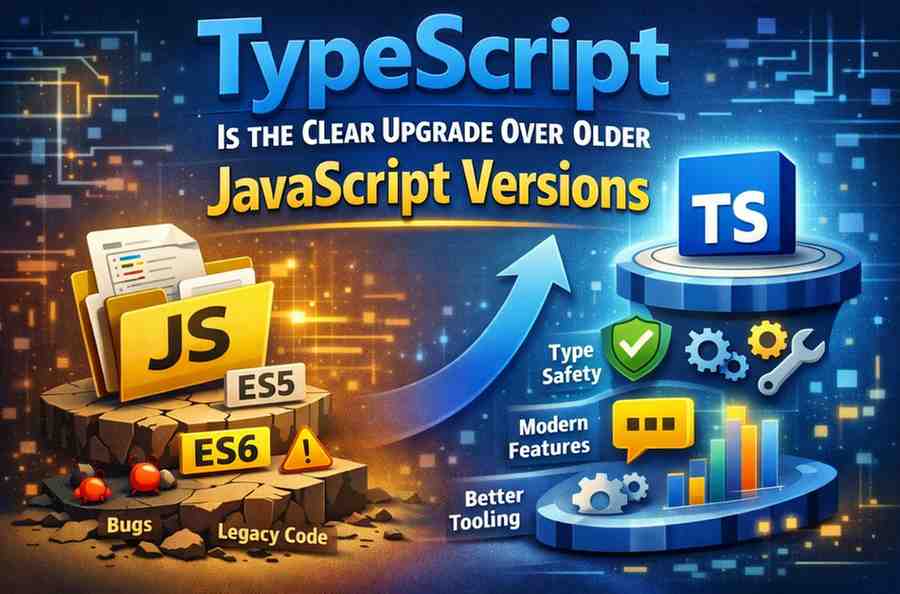
Why TypeScript Is the Clear Upgrade Over Older JavaScript Versions Web development has evolved rapidly over the last decade. As applications have grown more complex, the limitations of older JavaScript versions have become more visible. Issues like runtime errors, weak scalability, and maintenance challenges pushed developers to look for better solutions. This is where TypeScript stepped in and redefined modern frontend and backend development. Today, TypeScript Web Development is widely considered a practical and future-ready upgrade over traditional JavaScript. The Limitations of Older JavaScript Versions JavaScript was originally designed to handle small scripts and simple browser interactions. Older versions lacked strict structure, making it easy to write code but hard to manage at scale. As projects grew, teams often faced unexpected runtime errors, inconsistent code patterns, and poor readability. Debugging was also a major concern. Errors would surface only after execution, often in production environments. For businesses, this meant higher costs, delayed releases, and unstable user experiences. While frameworks tried to fill these gaps, the core language itself needed improvement. TypeScript Brings Structure Without Sacrificing Flexibility TypeScript builds on JavaScript by adding static typing, interfaces, and modern tooling support. The key advantage is that developers can catch errors during development rather than after deployment. This alone saves time, effort, and money. Unlike older JavaScript versions, TypeScript allows teams to define clear contracts between components. Variables, functions, and APIs follow predictable rules. Yet, it does not restrict flexibility. Any valid JavaScript code runs seamlessly in TypeScript, making adoption smooth and low risk. For organizations upgrading legacy systems, TypeScript Web Development offers a balanced approach. Teams can migrate gradually while continuing to deliver features. Improved Code Quality and Maintainability One of the strongest reasons TypeScript outperforms older JavaScript versions is maintainability. Typed code is easier to understand, especially in large teams. New developers can read type definitions and instantly grasp how data flows through the system. Refactoring also becomes safer. With older JavaScript, changing a function could break multiple areas without warning. TypeScript highlights these issues during development. This leads to cleaner codebases, reduced technical debt, and longer software lifespans. From a customer perspective, better maintainability means faster updates, fewer bugs, and more reliable applications. Better Tooling and Developer Productivity TypeScript integrates deeply with modern IDEs and editors. Features like intelligent autocomplete, inline documentation, and real-time error detection dramatically improve developer productivity. Older JavaScript versions relied heavily on manual testing and debugging. TypeScript reduces this burden by acting as a safety net. Developers spend less time fixing avoidable errors and more time building meaningful features. For businesses, this translates into faster development cycles and predictable delivery timelines. Projects stay on budget and scale efficiently as requirements grow. Stronger Support for Modern Frameworks Most modern frameworks and libraries now prioritize TypeScript. Angular was built with TypeScript at its core, and React, Vue, and Node.js ecosystems provide first-class TypeScript support. Using TypeScript with these frameworks improves consistency and performance. It aligns frontend and backend development under a single, strongly typed language. This consistency was difficult to achieve with older JavaScript versions. As a result, TypeScript Web Development has become the preferred choice for enterprise-grade applications and long-term digital products. Enhanced Scalability for Growing Businesses Scalability is not just about handling more users. It also involves managing growing teams, features, and integrations. Older JavaScript versions often struggled in this area due to loose structure and unpredictable behavior. TypeScript provides a scalable foundation by enforcing standards across the codebase. Teams can define shared models, reusable components, and consistent APIs. This makes collaboration smoother and reduces onboarding time for new developers. For customers, scalable architecture means applications that grow smoothly without frequent rewrites or performance issues. Security and Reliability Advantages While TypeScript is not a security tool by itself, it significantly reduces common errors that lead to vulnerabilities. Type mismatches, undefined values, and incorrect API usage are flagged early. Older JavaScript versions allowed these issues to slip into production unnoticed. TypeScript improves reliability by preventing many of these mistakes before the application goes live. More reliable software builds trust with users and protects brand reputation in competitive markets. Conclusion TypeScript is not just an upgrade to JavaScript. It is a practical response to the challenges modern web applications face. By addressing the limitations of older JavaScript versions, it delivers better code quality, improved scalability, and higher development efficiency. For businesses looking to build stable, future-ready applications, TypeScript Web Development offers a clear, customer-focused advantage that aligns technology with long-term growth goals.
NestJS Outperforms Older Backend Frameworks in Modern Development
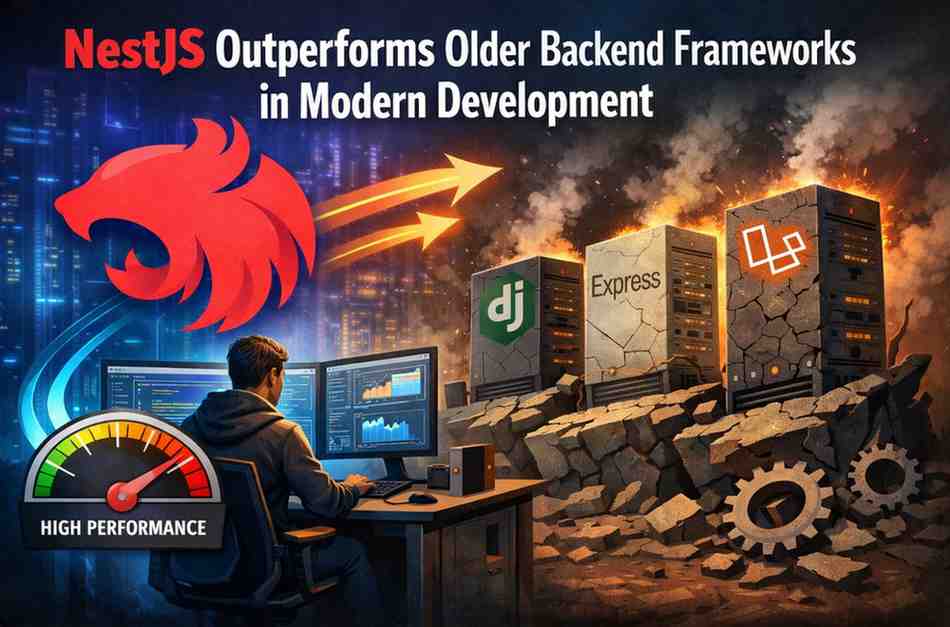
Why NestJS Outperforms Older Backend Frameworks in Modern Development Backend development has evolved rapidly over the last decade. Applications are no longer simple request–response systems. They now demand scalability, clean architecture, long-term maintainability, and seamless integration with modern frontends. While older Node.js frameworks like Express.js and early MVC patterns played a key role in shaping backend development, they often struggle to meet today’s enterprise and product-grade requirements. This is where NestJS Web Development stands out as a modern, future-ready solution. The Limitations of Older Backend Frameworks Older backend frameworks were designed for speed and simplicity. Express.js, for example, gives developers full control but very little structure. This freedom often leads to inconsistent folder structures, tightly coupled logic, and technical debt as projects grow. Key challenges with older frameworks include: Lack of enforced architecture or design patterns Difficulties in scaling large codebases Increased maintenance cost over time Dependency management handled manually Limited native support for modern TypeScript features For small projects, these frameworks still work well. However, when businesses aim to build complex platforms, APIs, or SaaS products, these limitations become costly. NestJS: Built for Modern Application Architecture NestJS was created to solve exactly these problems. It brings a well-defined, opinionated structure inspired by Angular while running on top of Node.js. This makes NestJS Web Development highly suitable for teams that want clarity, consistency, and scalability from day one. At its core, NestJS uses modules, controllers, and services to separate concerns clearly. This structure helps teams collaborate better and makes onboarding new developers faster. Businesses benefit from predictable development cycles and reduced refactoring costs. TypeScript First Approach One of the biggest advantages NestJS has over older frameworks is its TypeScript-first design. While TypeScript can be added to Express, it often feels like an afterthought. In contrast, NestJS is built around TypeScript, providing strong typing, better tooling, and early error detection. For businesses, this means: Fewer runtime errors Better code quality Easier long-term maintenance Improved developer productivity This makes NestJS Web Development a strong choice for enterprise applications where reliability and stability matter. Dependency Injection for Cleaner Code Dependency Injection is not native in most older Node.js frameworks. Developers often rely on manual imports and shared utilities, which leads to tightly coupled code. NestJS includes a powerful, built-in dependency injection system. This approach allows: Loose coupling between components Easier unit testing and mocking Better reusability of services Cleaner and more readable code From a customer perspective, this translates into faster updates, fewer bugs, and a backend that can adapt easily to changing business needs. Scalability and Microservices Readiness Modern applications rarely stay small. They grow into distributed systems, integrate third-party services, and often adopt microservice architectures. Older frameworks were not designed with this scale in mind. NestJS supports microservices out of the box with built-in tools for REST APIs, GraphQL, WebSockets, and message brokers like Kafka and RabbitMQ. This flexibility allows businesses to start with a monolithic application and evolve into microservices without rewriting the entire backend. Security and Performance Advantages Security is another area where NestJS excels. It provides structured support for authentication, authorization, guards, interceptors, and middleware. Implementing security best practices is far easier compared to older frameworks where everything must be manually wired. Performance is also optimized. NestJS can run on Fastify, offering higher throughput than traditional Express setups. For customers, this means faster APIs, smoother user experiences, and better performance under high traffic. Long-Term Maintainability and Cost Efficiency One of the hidden costs of older frameworks is maintenance. As applications grow, poorly structured code becomes expensive to update. NestJS reduces this risk by enforcing best practices from the beginning. Benefits include: Cleaner project structure Easier debugging and testing Lower long-term development cost Higher confidence when adding new features For organizations planning long-term digital products, NestJS is not just a technical upgrade but a strategic investment. Conclusion Older backend frameworks laid the foundation for modern web development, but they are no longer enough for today’s complex business requirements. NestJS offers a structured, scalable, and TypeScript-driven approach that aligns perfectly with modern development standards. By choosing NestJS, businesses gain cleaner architecture, better performance, improved security, and reduced maintenance costs. In today’s competitive digital landscape, adopting NestJS Web Development is a smart move for building reliable and future-proof backend systems.
Express.js Outperforms Older Backend Frameworks in Modern Web Development
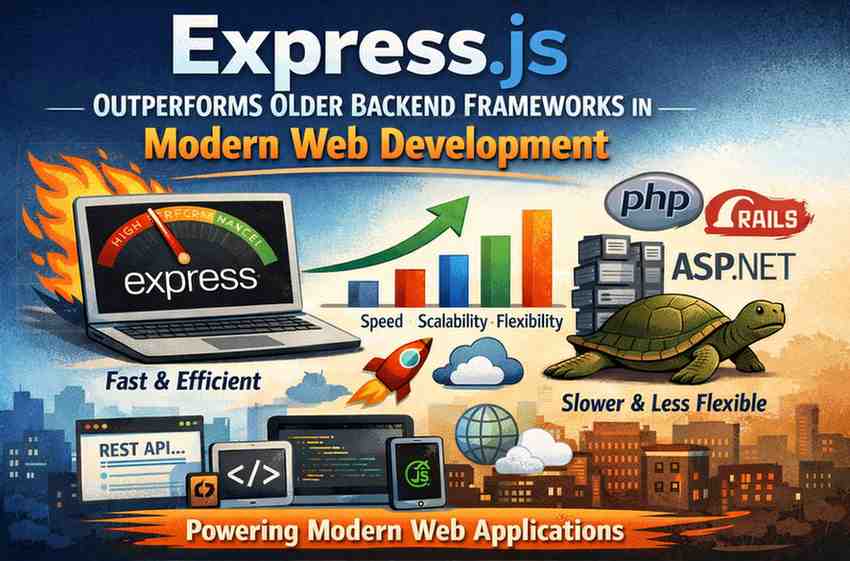
Why Express.js Outperforms Older Backend Frameworks in Modern Web Development Web development has changed significantly over the past decade. Businesses today expect faster load times, scalable architectures, real-time features, and seamless user experiences across devices. Older backend frameworks were not built with these expectations in mind. This is where Express.js Web Development has clearly positioned itself as a modern, efficient, and business-ready solution. Express.js is a lightweight and flexible Node.js framework that simplifies backend development while offering high performance and scalability. Compared to legacy backend frameworks and early server-side solutions, Express.js delivers clear advantages that align with today’s digital demands. Evolution from Traditional Backend Frameworks Older backend frameworks often relied on monolithic architectures, heavy configuration files, and tightly coupled components. While they served their purpose in earlier web eras, they struggle to meet modern requirements such as API-first development, microservices, and real-time communication. In contrast, Express.js was designed for speed, simplicity, and adaptability. It embraces minimalism, allowing developers to add only what is necessary. This approach reduces complexity, improves maintainability, and accelerates development cycles, which directly benefits businesses looking to launch products faster. Performance and Speed Advantages Performance is one of the strongest reasons businesses move away from older frameworks. Traditional systems often process requests sequentially, which limits their ability to handle high traffic efficiently. Express.js leverages Node.js’s non-blocking, event-driven architecture. This allows applications to handle thousands of concurrent requests without slowing down. For businesses, this means faster response times, smoother user experiences, and the ability to scale without major infrastructure changes. This performance advantage makes Express.js Web Development ideal for high-traffic platforms such as e-commerce websites, SaaS products, and real-time applications. Simplified Development and Maintenance Legacy frameworks often require extensive boilerplate code and rigid structures, making development slow and error-prone. Even small updates can require changes across multiple files, increasing maintenance costs. Express.js offers a clean and intuitive structure. Routing, middleware, and request handling are straightforward and easy to manage. Developers can focus on business logic rather than framework limitations. This results in faster development, fewer bugs, and easier long-term maintenance. For organizations, this translates into reduced development costs and quicker updates when market needs change. Modern API-First and Microservices Support Modern applications are rarely standalone systems. They connect with mobile apps, third-party services, payment gateways, and cloud platforms. Older frameworks were not originally designed for API-centric architectures, which can make integration difficult. Express.js excels in building RESTful APIs and microservices. It integrates seamlessly with JSON, authentication systems, and external services. This makes it easier for businesses to expand functionality, integrate new tools, and future-proof their applications. Companies adopting Express.js Web Development gain flexibility that older backend technologies struggle to offer. Strong Ecosystem and Community Support One of the biggest limitations of older frameworks is declining community support. Fewer updates, limited plugins, and outdated documentation can slow down development and increase security risks. Express.js benefits from the massive Node.js ecosystem. Thousands of open-source packages are available through npm, allowing developers to add features like authentication, logging, validation, and security with ease. Regular updates and active community support ensure that applications stay secure and up to date. For businesses, this means long-term reliability and access to modern development tools without reinventing the wheel. Scalability for Growing Businesses Scalability is a major concern for any growing organization. Many older frameworks require significant refactoring or hardware upgrades to handle increased traffic. Express.js scales efficiently, especially when combined with cloud platforms and container technologies. Whether a business starts small or operates at enterprise scale, Express.js adapts smoothly to growth. This makes it a smart investment for startups and established companies alike. By choosing Express.js Web Development, businesses ensure that their applications can grow alongside their customer base without performance bottlenecks. Security and Compliance Improvements Security expectations have evolved rapidly. Older frameworks may lack built-in protections against modern threats or require complex configurations to meet compliance standards. Express.js supports modern security practices through middleware and community-driven tools. Features such as input validation, authentication, rate limiting, and secure headers are easy to implement. This helps businesses protect sensitive data and meet regulatory requirements more effectively. Conclusion The shift from legacy backend frameworks to modern solutions is no longer optional. Businesses need performance, scalability, flexibility, and faster time to market. Express.js delivers all of this through a lightweight architecture, strong ecosystem, and modern development approach. Compared to older frameworks, Express.js provides better performance, easier maintenance, seamless API integration, and long-term scalability. For organizations looking to build future-ready applications, Express.js Web Development stands out as a reliable and strategic choice.
Modern PHP Outperforms Its Older Versions in Today’s Development Landscape

Why Modern PHP Outperforms Its Older Versions in Today’s Development Landscape PHP has been a cornerstone of web development for decades. From powering early dynamic websites to supporting large scale platforms today, it has evolved significantly. Many businesses still associate PHP with its older versions, often assuming it is outdated or limited. This perception no longer holds true. Modern PHP has addressed past limitations and now stands as a robust, secure, and high performance technology for building scalable digital solutions. Understanding how current PHP versions outperform older releases helps decision makers choose the right foundation for long term growth in PHP Web Development. Performance Improvements That Matter to Businesses Older PHP versions, especially before PHP 7, struggled with execution speed and memory efficiency. Applications often required more server resources to handle growing traffic, leading to higher infrastructure costs. Modern PHP versions introduced a completely redesigned engine that significantly boosts performance. Execution time has been reduced, memory usage is lower, and response times are faster. For businesses, this means websites and applications load quicker, handle more concurrent users, and scale without frequent hardware upgrades. Faster applications also improve user experience, which directly impacts customer retention and conversion rates. These performance gains alone make modern PHP a smart investment for companies focused on efficiency and growth. Stronger Security Compared to Legacy PHP Security was one of the most common concerns with older PHP versions. Many legacy applications relied on outdated practices that left them vulnerable to attacks. Modern PHP addresses this with built in security enhancements, better encryption support, and improved error handling. Newer versions encourage secure coding standards by default, reducing the risk of common threats such as SQL injection and cross site scripting. Regular updates and active community support ensure vulnerabilities are identified and patched quickly. For organizations handling sensitive customer data, modern PHP Web Development provides a much stronger security foundation than earlier versions ever could. Cleaner Syntax and Better Developer Productivity Older PHP codebases were often criticized for inconsistent syntax and lack of structure. This made long term maintenance difficult and increased development time. Modern PHP introduces cleaner syntax, strict typing options, and advanced language features that improve code readability and reliability. These improvements allow development teams to write cleaner code, reduce bugs, and collaborate more effectively. For clients, this translates into faster development cycles, easier updates, and lower maintenance costs over time. A well structured PHP application is easier to scale and adapt as business needs evolve. Enhanced Framework and Tool Ecosystem The rise of modern PHP frameworks has transformed how applications are built. Older PHP versions lacked standardized tools, leading to fragmented development practices. Today’s PHP ecosystem includes mature frameworks that follow industry best practices and design patterns. These frameworks streamline development, improve security, and ensure consistency across projects. They also integrate seamlessly with modern tools for testing, deployment, and performance monitoring. Businesses benefit from faster time to market and more reliable applications built on proven foundations. Compatibility with Modern Technologies Legacy PHP often struggled to integrate with newer technologies and architectures. Modern PHP is designed to work smoothly with APIs, cloud platforms, microservices, and modern databases. This flexibility allows businesses to build future ready systems without being locked into outdated architectures. Whether integrating with third party services, building mobile friendly backends, or deploying applications in cloud environments, PHP has adapted to modern requirements. This makes it a practical choice for organizations planning long term digital transformation using PHP Web Development. Long Term Support and Community Backing One major drawback of older PHP versions is the lack of ongoing support. Unsupported versions expose businesses to security risks and compatibility issues. Modern PHP versions come with clear support timelines, ensuring regular updates and stability. The global PHP community remains active, continuously improving documentation, tools, and best practices. This strong ecosystem reduces dependency on individual developers and ensures long term viability for business applications. Cost Effectiveness Without Compromising Quality Compared to many newer technologies, PHP remains cost effective while delivering enterprise level performance. Modern PHP reduces development time, lowers infrastructure costs through better performance, and minimizes security risks. This balance makes it particularly attractive for startups, small businesses, and large enterprises alike. By upgrading from older versions, businesses protect existing investments while gaining modern capabilities without rebuilding applications from scratch. Conclusion Modern PHP is no longer the language many remember from its early days. It is faster, more secure, easier to maintain, and fully aligned with today’s digital demands. Choosing updated PHP over legacy versions allows businesses to build scalable, reliable, and future ready solutions. For organizations seeking a proven yet modern approach, PHP Web Development remains a powerful and dependable choice in the evolving web ecosystem.
Why NodeJS Has Surpassed Older Development Approaches
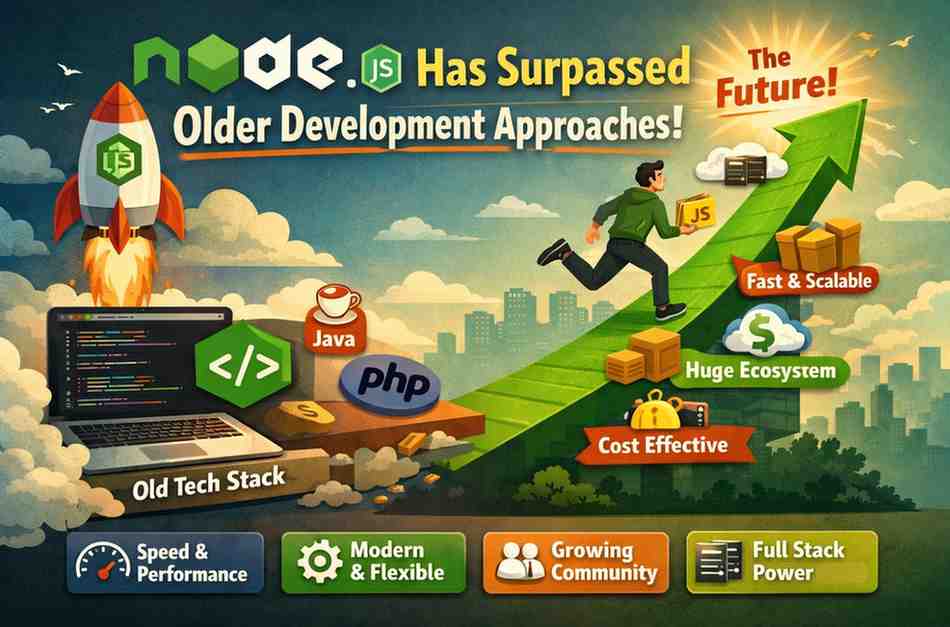
Why NodeJS Has Surpassed Older Development Approaches Web development has changed significantly over the last decade. Businesses today expect faster applications, real time features, seamless scalability, and lower operational costs. Older server side technologies were built in a different era, when applications were simpler and user expectations were lower. This shift in demand is the key reason why NodeJS Web Development has emerged as a preferred choice over traditional development models. This article analyzes why NodeJS has replaced older approaches and how it delivers measurable value to modern businesses. Limitations of Older Server Side Technologies Traditional web development platforms like early PHP frameworks, ASP.NET Web Forms, and synchronous Java based servers followed a blocking I O model. Each request consumed a dedicated thread, which limited performance under heavy traffic. As user loads increased, applications became slower and harder to scale. Another challenge was fragmented development. Frontend and backend were often built using different languages and teams, which increased development time and communication gaps. Maintenance also became costly, as small changes required multiple layers of coordination. For businesses, these limitations translated into delayed launches, higher infrastructure costs, and difficulty supporting real time features like live chat, notifications, or streaming. Event Driven Architecture of NodeJS NodeJS introduced an event driven, non blocking architecture that changed how servers handle requests. Instead of creating a new thread for every user action, NodeJS processes multiple requests using a single event loop. This allows applications to stay responsive even during high traffic periods. From a business standpoint, this means better performance without proportional increases in server costs. Applications built with NodeJS Web Development can support thousands of concurrent users while maintaining speed and stability. This architecture is particularly valuable for applications that rely on continuous data exchange, such as collaboration tools, dashboards, and messaging platforms. Faster Development with JavaScript Everywhere One of the biggest advantages NodeJS has over older platforms is the use of JavaScript across the entire application stack. Developers can write frontend and backend code in the same language, reducing context switching and simplifying workflows. Shared code libraries, reusable modules, and unified tooling help teams build features faster and with fewer errors. Businesses benefit from shorter development cycles, quicker updates, and easier onboarding of developers. By choosing NodeJS Web Development, organizations gain agility. This is crucial in competitive markets where speed to launch and continuous improvement directly impact revenue. Scalability for Growing Businesses Older systems often required vertical scaling, which meant upgrading servers to handle more users. This approach was expensive and had clear limits. NodeJS, on the other hand, is designed for horizontal scaling. NodeJS applications can be easily distributed across multiple servers or cloud instances. They integrate smoothly with modern cloud platforms and container based architectures. This allows businesses to scale gradually based on demand rather than making large upfront investments. For startups and enterprises alike, this flexibility reduces risk and ensures that the technology grows alongside the business. Rich Ecosystem and Community Support NodeJS benefits from one of the largest open source ecosystems in the world. The Node Package Manager provides access to thousands of ready made modules for authentication, payments, analytics, and more. This ecosystem significantly reduces development effort compared to older technologies, where custom solutions were often required. Regular updates, strong community support, and enterprise level backing make NodeJS a future ready choice. Clients benefit from stable applications, faster feature additions, and reduced dependency on proprietary tools. Real Time Capabilities as a Standard Modern users expect instant updates. Whether it is order tracking, live notifications, or collaborative editing, real time interaction is no longer optional. Implementing these features on older systems required complex workarounds and third party tools. NodeJS handles real time communication natively using technologies like Web Sockets. This makes it ideal for applications where responsiveness and user engagement are critical. Businesses adopting NodeJS can deliver better user experiences without adding unnecessary complexity to their systems. Conclusion The shift from older development approaches to NodeJS is driven by real business needs, not trends. Performance, scalability, faster development, and real time capabilities are essential for modern digital products. NodeJS addresses these needs with a flexible, efficient, and developer friendly architecture. For organizations looking to build scalable, future ready applications, NodeJS Web Development offers a clear advantage over legacy technologies, helping businesses stay competitive, reduce costs, and deliver better digital experiences.
Why ReactJS Web Development Has Replaced Older Frontend Frameworks
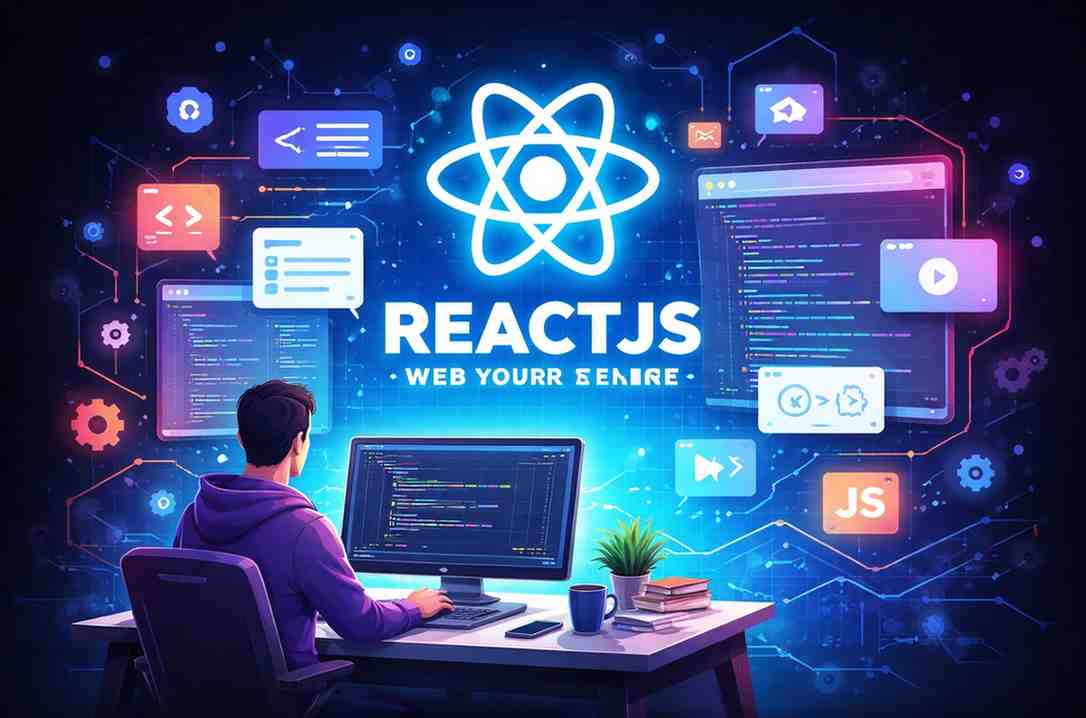
Why ReactJS Web Development Has Replaced Older Frontend Frameworks Web development has evolved rapidly over the last decade. Early websites relied on static HTML, CSS, and basic JavaScript. As user expectations grew, older frontend frameworks like jQuery, AngularJS, and server-rendered templates struggled to keep up with performance, scalability, and user experience demands. This shift paved the way for ReactJS, a modern JavaScript library that fundamentally changed how interfaces are built. Today, ReactJS Web Development is widely adopted by startups and enterprises alike. Its component-based architecture, virtual DOM, and strong ecosystem have made it the preferred choice over older approaches. Limitations of Older Frontend Technologies Before ReactJS, most applications were built using jQuery or early MVC frameworks. While these tools served their purpose, they introduced several challenges: Complex DOM manipulation: Directly updating the DOM caused performance bottlenecks in large applications. Poor scalability: As applications grew, codebases became harder to maintain. Tight coupling: UI logic and business logic were often mixed, increasing development time. Limited reusability: Components could not be easily reused across projects. For businesses, these limitations translated into higher costs, slower releases, and inconsistent user experiences. ReactJS and the Shift to Component-Based Architecture ReactJS introduced a component-driven approach that changed frontend development at its core. Each UI element is built as an independent, reusable component, making applications easier to scale and maintain. With ReactJS Web Development, developers can break complex interfaces into smaller, manageable units. This improves collaboration, reduces bugs, and accelerates development cycles. From a business perspective, it means faster time-to-market and easier feature enhancements. Virtual DOM and Performance Improvements One of ReactJS’s most significant innovations is the Virtual DOM. Instead of updating the entire web page when data changes, React updates only the affected components. Older frameworks relied heavily on real DOM manipulation, which is slow and resource-intensive. React’s Virtual DOM optimizes rendering, resulting in: Faster page loads Smoother user interactions Better performance on low-powered devices This performance edge makes ReactJS ideal for modern, data-driven applications such as dashboards, eCommerce platforms, and SaaS products. Enhanced User Experience and Interactivity Modern users expect fast, responsive, and intuitive interfaces. ReactJS excels at building dynamic single-page applications where content updates without full page reloads. Using ReactJS Web Development, businesses can deliver seamless navigation, real-time updates, and engaging interfaces. This directly impacts customer satisfaction, conversion rates, and brand perception. Older technologies often required multiple page reloads or complex workarounds to achieve similar results, leading to slower and less polished experiences. Strong Ecosystem and Community Support ReactJS benefits from one of the largest developer communities in the world. Backed by Meta and widely adopted across industries, it offers a mature ecosystem of tools, libraries, and integrations. Key advantages include: Compatibility with modern tools like Redux, Next.js, and TypeScript Long-term support and regular updates Easy integration with backend technologies In contrast, older frameworks like AngularJS have reached end-of-life, making them risky for long-term business use. Flexibility and Future Readiness ReactJS is not a rigid framework. It allows developers to choose supporting libraries based on project needs. This flexibility makes it suitable for everything from small business websites to enterprise-grade applications. As web standards evolve, ReactJS continues to adapt. Features like hooks, concurrent rendering, and server-side rendering ensure applications stay future-ready. Businesses investing in ReactJS avoid costly rewrites that are often required with outdated technologies. Cost Efficiency for Businesses From a customer perspective, ReactJS reduces long-term development and maintenance costs. Reusable components, faster debugging, and easier scaling mean fewer resources are needed over time. Compared to older frontend stacks, ReactJS offers a higher return on investment by supporting faster development, consistent UI design, and long-term scalability. Conclusion Older frontend technologies laid the foundation for modern web development, but they can no longer meet today’s performance and scalability expectations. ReactJS has emerged as a clear successor by offering speed, flexibility, and a superior user experience. For businesses aiming to build reliable, future-proof digital products, ReactJS Web Development is not just an upgrade, it is a strategic advantage.