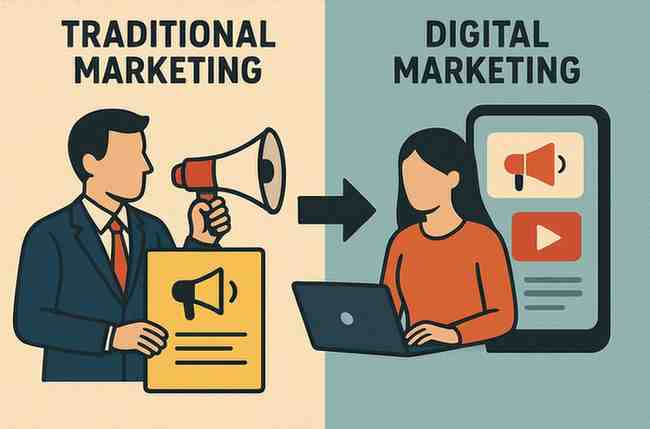
The Shift From Traditional Marketing to Digital Marketing: Why Modern Tools Deliver Better Results For years, businesses relied on print ads, billboards, radio spots, and door-to-door promotions to reach customers. These methods worked when audiences were less fragmented and had limited media choices. Today, attention spans have changed, and customers expect brands to communicate quickly, consistently, and with relevance. This shift has made digital marketing not just helpful but essential. What’s driving this transformation is the growing adoption of advanced platforms like Digital Marketing Automation Software , which brings speed, accuracy, and personalization that older marketing models simply cannot match. Traditional Marketing: Effective Once, Limited Now Older marketing methods had a predictable rhythm. A business would design a print ad, approve artwork, negotiate newspaper placements, and wait days or weeks for the audience to respond. Tracking performance was slow and mostly based on guesswork. Customer engagement lacked personalization, and feedback loops were inefficient. These methods also required hefty budgets. A small business often struggled to compete with brands that could afford recurring print ads or large hoardings. Even when campaigns performed well, the lack of real-time data made optimization difficult. Today’s market demands agility. Customers expect instant responses, tailored content, and cross-platform consistency. This is where modern digital tools outperform traditional models in every key metric. Digital Marketing: Built for Speed, Precision, and Scale Digital marketing reshaped customer engagement by offering measurable, targeted, and time-sensitive interactions. Instead of waiting for customers to discover an ad, businesses can now reach them based on behavior, demographics, interests, device type, or even purchase intent. Real-time dashboards help teams track clicks, conversions, and revenue as they happen. Tools such as Digital Marketing Automation Software bring order to this ecosystem by automating campaigns, segmenting audiences, and ensuring consistent brand communication across multiple touchpoints. Why Digital Marketing Outperforms Older Methods 1. Better Targeting and Customer Understanding Traditional marketing relied on broad messaging. A newspaper ad reached a wide audience, but only a small percentage fit the intended customer profile. Digital platforms allow businesses to identify ideal customers through data points such as search behavior, past purchases, browsing interests, and engagement history. This gives brands the ability to deliver messages that matter. 2. Real-Time Performance Tracking Unlike traditional campaigns where results took weeks, digital campaigns offer immediate insights. Click-through rates, conversions, customer journeys, and drop-off points can be tracked live. This helps marketers adjust campaigns instantly if something isn’t working. 3. Lower Costs with Higher Conversion Potential Old methods required large budgets for design, printing, and placements. Digital campaigns can start with small budgets and scale based on results. Even the smallest business can run highly targeted ads on social media or search platforms. 4. Automated Processes Save Time and Reduce Errors Modern businesses often run campaigns across email, social media, websites, messaging apps, and ad networks. Doing this manually can overwhelm any team. Tools like Digital Marketing Automation Software centralize these tasks, automate repetitive activities, and minimize manual errors. 5.Personalized Customer Experiences Today’s customers expect brands to remember their preferences. Digital tools help businesses design personalized journeys based on past actions. For example, someone who browses a product but doesn’t purchase can automatically receive a reminder email or tailored offer. 6. Faster Customer Engagement Digital platforms allow immediate response through chatbots, automated emails, instant notifications, and real-time support. This speed matters because customers often choose brands that respond fastest. How Automation Makes Digital Marketing Even More Effective Digital marketing was already powerful, but automation has taken it to the next level. Automation ensures every lead receives timely communication, every segment gets the right content, and every campaign runs without manual monitoring. Here’s how automation enhances performance: Lead Nurturing: Automated sequences guide prospects through the sales funnel with relevant content. Campaign Scheduling: Businesses can plan campaigns days or months ahead and let the tool execute them. Segmentation: Users are grouped based on behavior, demographics, or interests for more precise targeting. Consistency: Automation ensures messaging stays on track across multiple channels and time zones. Scalability: Whether handling 1,000 or 1,000,000 users, automation keeps processes smooth without extra manpower. This combination of efficiency and personalization helps businesses deliver experiences that older marketing strategies simply could not match. Customer-Centric Benefits Driving Modern Growth Digital transformation is not only about better technology. It’s about customer satisfaction. Modern tools help brands understand customer needs, communicate clearly, and deliver value at the right moment. Key customer-centric advantages include: Simplified service experience Faster query resolution Personalized recommendations Convenient digital interactions Transparent tracking of orders or services Better engagement through tailored content These improvements help brands build trust. When customers feel understood, they stay longer and recommend the business to others. Why Businesses Must Move Beyond Traditional Marketing Old marketing models served their time well. But today’s customers expect speed, transparency, and personalized attention. Competing in an environment where digital experiences define brand perception requires modern systems that can adapt quickly. Businesses that continue relying on outdated methods risk losing relevance and visibility. Digital transformation is no longer optional. It is necessary for brands that want to grow in a competitive market. Conclusion The evolution from traditional marketing to modern digital strategies has created new opportunities for businesses to connect meaningfully with their customers. Adopting platforms like the Digital Marketing Automation Software helps companies streamline operations, deliver personalized experiences, and respond to market changes with confidence. The future belongs to businesses that embrace technology and prioritize customer engagement at every step.
